By Gary Seven
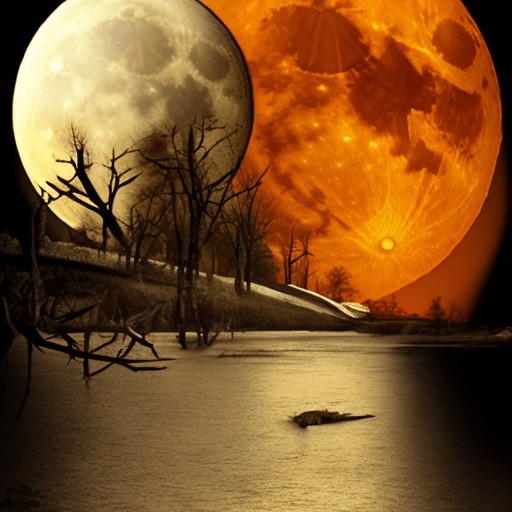
‘Lunacy’, a term with its roots in the Latin word ‘luna’, means moon. The conceptualisation is ancient. Greeks and Romans associated the moon with episodes of insanity and temporal madness. In the Middle Ages, mental health treatments were planned according to the lunar phases. However, since 1930, ‘lunatic’ has been replaced with mental ailment in legal terminology.
THE FULL MOON AND CRIME RATES: DISPELLING THE MYTH
Today, a popular belief links the full moon to an increase in crime rates. Several studies have been conducted to investigate this potential correlation. These investigations essentially reveal no direct link of the lunar phases to criminal incidents. A few isolated studies note slight aggression spikes, but the overall consensus is clear: the moon doesn’t affect criminal behaviour significantly.
THE FULL MOON: AFFECT ON OUR HEALTH?
The moon’s impact on human health, particularly sleep patterns, has been a research topic. Studies suggest the full moon might lead to less total sleep time and lower melatonin levels. Melatonin is a hormone regulating our sleep-wake cycles. Even though these findings imply potential health effects, to date, researchers have not reached a unified agreement.
CASE STUDY 1: A WIDESPREAD SLEEP STUDY
A research project involving 33 volunteers conducted over a three-year period analysed sleep patterns during different lunar phases. During full moon, on average, participants took five minutes longer to fall asleep and slept 20 minutes less overall.
CASE STUDY 2: PSYCHOLOGIST DUPLICATES FULL MOON STUDY
Dr. Martin Antenucci, a psychologist, embarked on a mission to replicate studies linking behaviour to lunar cycles. Despite his meticulous endeavor, he concluded: “Our study provides no proof of a lunar influence on human behaviour. The only significant finding was in debunking this long-standing myth.”
CASE STUDY 3: A LOOK AT THE PSYCHIATRIST’S CASEBOOK
Dr. Arnold Lieber, a psychiatrist, meticulously scrutinized his casebook to identify trends showing a link between mental health issues and the lunar cycle. Despite an exhaustive analysis, he found no significant evidence of the moon’s effect aside from ‘normal’ range fluctuations.
LUNAR EFFECT: PERSPECTIVES FROM THE SCIENTIFIC COMMUNITY
Many scientists and psychologists believe the assertion of the moon’s behavioural influence is a cognitive illusion – we associate strange events with the full moon, failing to realise these also occur in new moon phases. Experts like geneticist Steve Jones assert we notice only data that fits our preconceptions and ignore what doesn’t. Such bias could contribute to the ‘lunacy’ fallacy.
In essence, while the moon distinctly impacts environmental elements – from tidal waves to animal routines – its influence on human psyche remains inexplicibly nebulous. The lunar effect mostly resides within the realms of myths and folk tales. In the words of psychologist, Dr. Antenucci, “When something unusual occurs, people often look for an explanation. Sometimes, it’s easier to blame the situation on the moon than it is to confront the real causes.”
PSYCHOLOGICAL LUNAR EFFECT: A MATTER OF ILLUSIONS?
The magnetic allure of a full moon compels us to concoct elaborate tales, shaping our perceptions ever so subtly. However, hard scientific evidence to corroborate such lunar influences on human behaviour is far-fetched, even in this era of advanced psychological studies. This indicates the eternal appeal of myths and legends in explaining life’s enigmas.
 The Secret Paranormal Investigator